The Sergio Sollima Westerns: Politics, Power, and Cuchillo
How the third Sergio used the genre to create the most politically charged action cinema of the 1960s.
The Intellectual Third Sergio
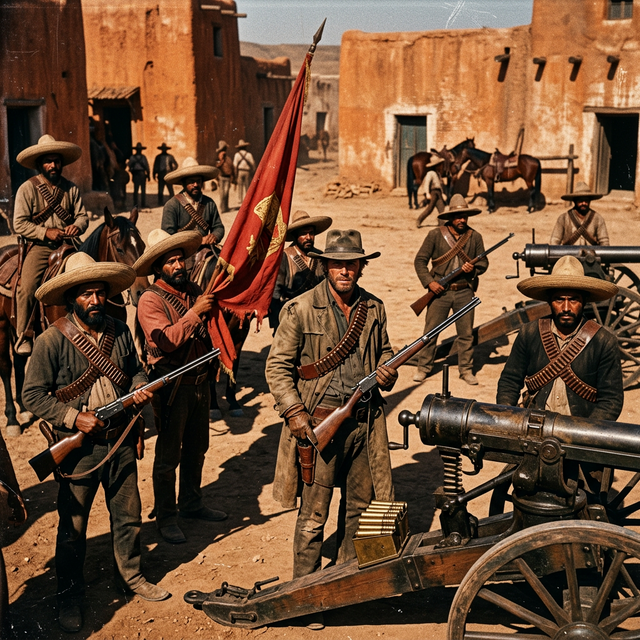
While Sergio Leone was the operatic visual stylist and Sergio Corbucci was the brutal, mud-caked pessimist of the Italian West, the third "Sergio" – Sergio Sollima – was the intellectual. With a background in anti-fascist resistance and journalism, Sollima approached the Spaghetti Western not just as an entertainment vehicle, but as a medium for sharp social critique.
Between 1966 and 1968, Sollima directed only three Westerns: The Big Gundown (La resa dei conti), Face to Face (Faccia a faccia), and Run, Man, Run (Corri uomo corri). Despite this small output, his trilogy is regarded as the high-water mark of the political "Zapata" Western, blending high-octane action with complex ideas about class struggle and the corrupting nature of power.
Cuchillo: The Ultimate Anti-Hero
Central to Sollima's vision was the character of Manuel "Cuchillo" Sanchez, played with wild, animalistic energy by Cuban actor Tomas Milian. Unlike Clint Eastwood's cool, silent gunfighter or Franco Nero's grim avenger, Cuchillo is a peasant thief who fights not for honor or revenge, but for survival. Armed only with a knife (hence his nickname "Knife") and his wits, Cuchillo represents the marginalized class under the heel of wealthy oppressors.
In The Big Gundown, Cuchillo is pursued by Jonathan Corbett (Lee Van Cleef), a lawman hired by a wealthy railroad tycoon. The chase is not just a game of cat and mouse, but a clash of ideologies. Corbett represents the rule of law exploited by capital, while Cuchillo represents the chaotic but pure desire for freedom. By the film's end, Corbett realizes he is hunting the wrong man, leading to a legendary showdown against his billionaire employer.
The Dangers of Ideology in Face to Face
Sollima's most intellectual film is Face to Face, which examines the psychological and political roots of fascism. The film pairs Brad Fletcher (Gian Maria Volontè), a refined history professor from New England, with Solomon "Beauregard" Bennet (Tomas Milian), a brutal bandit leader. Kidnapped by Bennet, the ailing professor is exposed to the harsh realities of the frontier.
In a brilliant subversion, Fletcher does not civilize Bennet; rather, Fletcher becomes fascinated by the power Bennet wields. Fletcher slowly takes control of the bandit gang, transforming them into a highly organized, fascistic militia. Fletcher's transformation from a gentle intellectual into a ruthless dictator serves as Sollima's profound warning about how easily civilized people can be seduced by violence and absolute power. It remains one of the most unique and thought-provoking entries in the entire history of the Western genre.
About the Author: Spaghetti Cinema Research Team
Analyzing the political and stylistic subversions of Italian genre cinema.