The Sound of the West
Guitars, whistles, and the operatic violence of Ennio Morricone.
Close your eyes. What do you hear? A whistle? A whip crack? A lone soprano wailing in an empty canyon?
If the visuals of the Spaghetti Western were defined by the sun, the soul of the genre was defined by the sound. Before the 1960s, Western scores were polite. They were orchestral. They faded into the background. Then came Ennio Morricone, and suddenly, the background was screaming at you.
The Maestro: Ennio Morricone
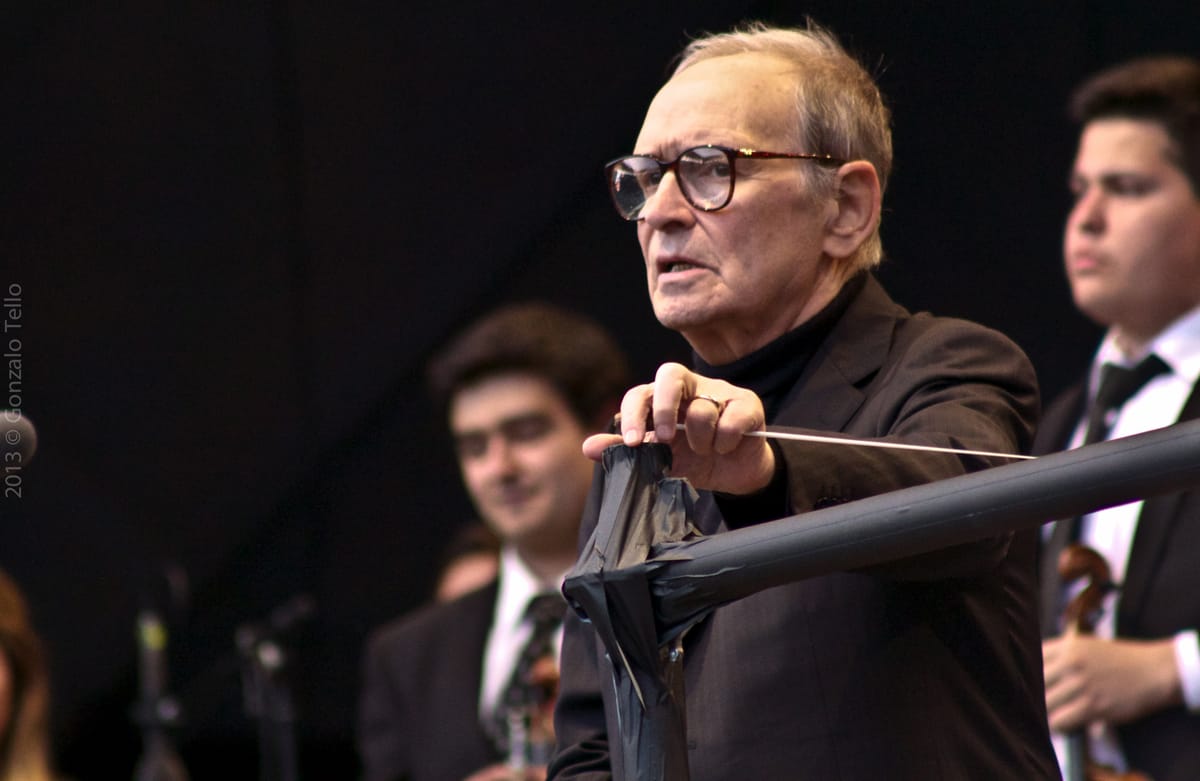
Ennio Morricone didn't just compose music; he built soundscapes. Before him, westerns sounded like copland-esque orchestras—sweeping strings and majestic horns. Morricone threw all that out. He used whistles, electric guitars, chanting, whips, and even coyotes.
Anvils being struck. Electric guitars (in the 1860s!). Men chanting. Whips cracking. Ticking watches. He took "musique concrète"—using real-world sounds as music—and applied it to the most commercial genre in the world. The result was a sonic landscape that was as harsh, blistering, and weird as the movies themselves. The famous "coyote howl" in *The Good, the Bad and the Ugly*? That’s two guys shouting. It’s genius born of poverty.
The Electric Wasteland
Historical accuracy? Forget it. The most revolutionary thing about these soundtracks was how gloriously fake they were. A Fender Stratocaster has no business being in a movie set during the Civil War. But in a Spaghetti Western, that reverb-drenched twang felt right.
It signaled to the audience that this wasn't a history lesson. It was a rock concert. It was a graphic novel before graphic novels existed. When the electric guitar kicked in, it wasn't accompaniment; it was raw adrenaline. It elevated the gunfight from a shootout to a mythical clash of titans.
Beyond the Maestro
Morricone was the god, but he wasn't the only disciple. Luis Bacalov brought a gothic, tragic pop sensibility to Django, making the hero's journey feel like a funeral march. Riz Ortolani and Bruno Nicolai went even further, mixing psychedelic rock with choral arrangements that sounded like a church choir on acid.
In these films, the music often was the script. Sergio Leone would famously play Morricone’s music on set while filming. The actors walked in time to the beat. Eastwood narrowed his eyes to the rhythm of a flute. The music didn't just support the movie; it directed it.