The Music Beyond Morricone
Celebrating Bacalov, Nicolai, and the other maestros of the Italian West.
In the Shadow of a Giant
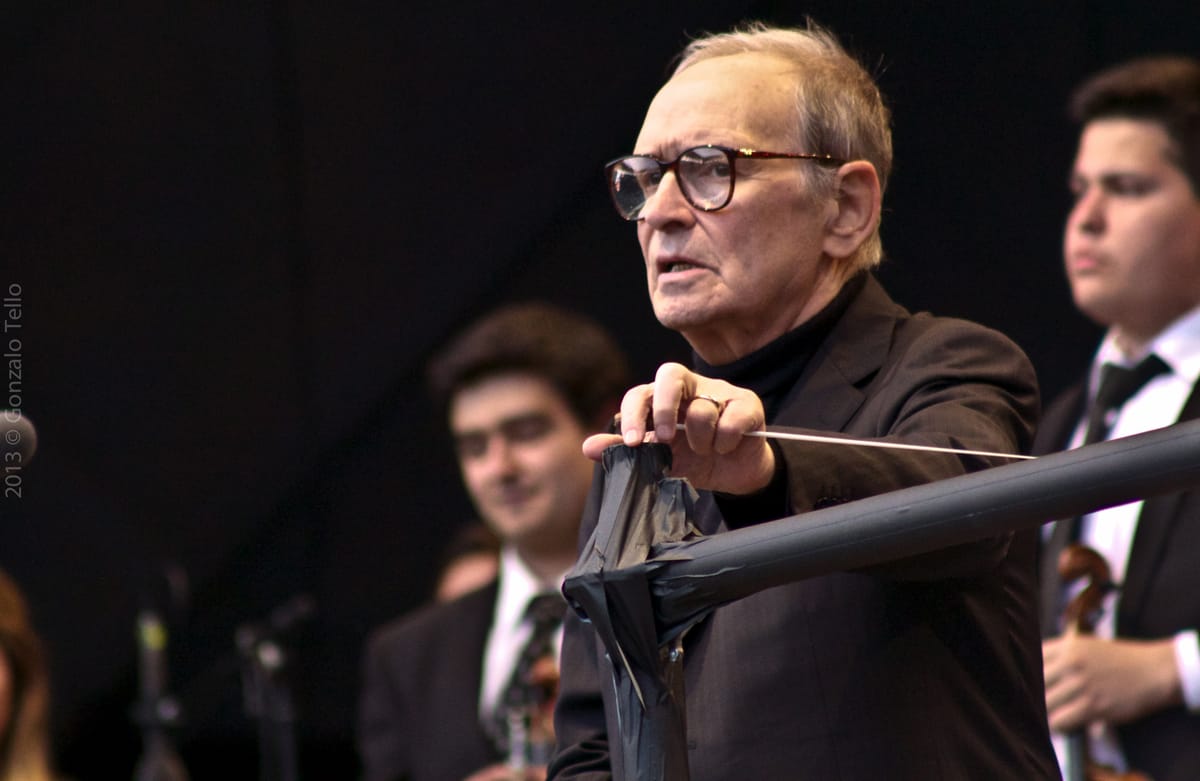
When people think of Spaghetti Western music, they immediately think of Ennio Morricone. His use of whistling, electric guitars, cracking whips, and soaring operatic choirs in the Dollars Trilogy fundamentally changed film scoring forever. However, the Italian film industry was a massive machine, and Morricone couldn't score all 600 Westerns produced during the era.
A cadre of incredibly talented composers worked alongside Morricone, often matching his brilliance and establishing their own unique sonic signatures. Chief among them was Luis Bacalov, a composer who would eventually win an Academy Award.
Luis Bacalov and the Gothic Sound
Luis Bacalov's score for Sergio Corbucci's Django is arguably the second most famous theme in the genre. Featuring a booming vocal performance by Rocky Roberts, the English-language title song felt more like a James Bond theme than a traditional Western track. Bacalov's orchestrations were often darker and more gothic than Morricone's, perfectly suiting Corbucci's bleak visuals.
Bacalov also composed the brilliant, driving score for The Grand Duel, a theme that Quentin Tarantino would later famously repurpose for the animated sequence in Kill Bill Vol. 1.
Bruno Nicolai and Francesco De Masi
Bruno Nicolai was Morricone's long-time conductor and collaborator, but he also composed dozens of scores under his own name. His work on the Sartana films and Day of Anger proved he was a master of the genre's signature blend of jazz, rock, and classical orchestration. The theme for Day of Anger, with its heavy bassline and blaring horns, remains a staple of DJ sets today.
Francesco De Masi, another prolific composer, brought a more traditional, brass-heavy symphonic sound to films like Any Gun Can Play, proving that the Italian composers were just as capable of producing sweeping, Aaron Copland-style epics as their Hollywood counterparts.
Gianni Ferrio and the Psych-Rock Frontier
Another major voice of the era was Gianni Ferrio, whose work on *A Man, a Horse, a Gun* (also known as *The Stranger*) combined psychedelic rock with classical guitar and brass. Ferrio loved using fuzz guitars, Hammond organs, and heavy percussion, creating scores that reflected the counter-culture movement of the late 1960s. His themes felt modern, raw, and slightly trippy, adding a distinct flavor to the genre.
The collective output of these composers created a gold standard for genre filmmaking. Far from being simple copycats of Morricone, they pushed the boundaries of musical experimentation. Their scores remain incredibly influential, proving that the Italian Western was as much a revolution of sound as it was of image.
About the Author: Spaghetti Cinema Research Team
Specializing in the intersection of musicology and 1960s European cinema.