The Trinity Comedies: How Slapstick Killed the Spaghetti Western
The rise of Terence Hill and Bud Spencer, and the end of the gritty era.
A Shift in Tone
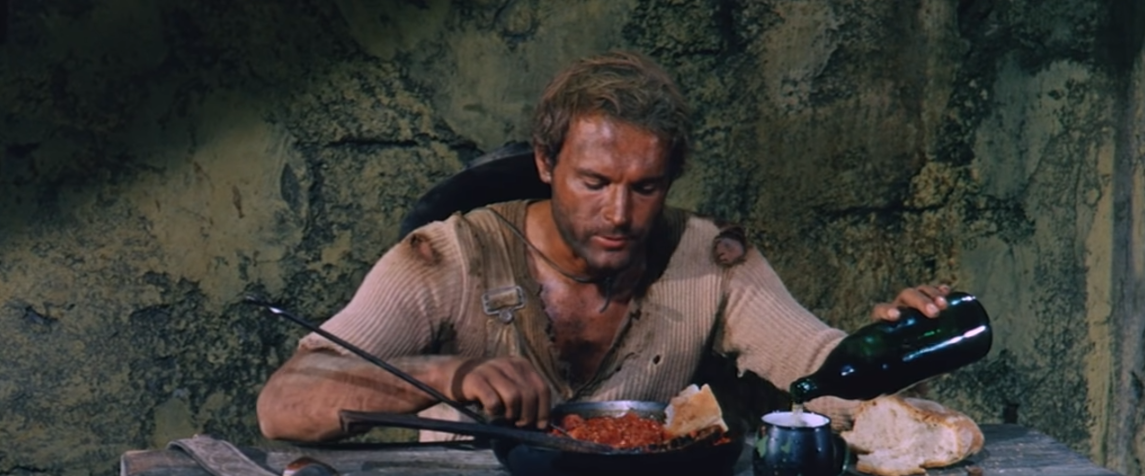
By 1970, the Italian public was growing weary of the relentless violence and bleak cynicism of the Spaghetti Western. The market was flooded with cheap imitations, and the genre needed a reinvention. It got one in the form of Enzo Barboni's They Call Me Trinity.
Starring the blue-eyed Terence Hill and the hulking Bud Spencer, the film was a massive box office smash. It retained the visual aesthetic of the Spaghetti Western—the dust, the beans, the fast draws—but replaced the blood and cruelty with slapstick comedy. Instead of shooting people, Bud Spencer would smash them over the head with a frying pan.
The Perfect Duo
Hill and Spencer were cinematic gold. Hill played the lazy, grinning, lightning-fast gunfighter, while Spencer played the grumpy, incredibly strong straight man. Their chemistry was undeniable, and the films functioned as live-action Looney Tunes cartoons set in the Wild West.
The sequel, Trinity Is Still My Name (1971), was an even bigger hit, becoming the highest-grossing Italian film of all time up to that point. The Italian film industry immediately pivoted.
The Death of the Gritty West
The success of the Trinity films was a double-edged sword. While it revitalized the box office, it effectively killed the serious Spaghetti Western. Producers demanded comedies. Directors who specialized in dark, violent thrillers were forced to shoot slapstick bar brawls. Even serious actors like Franco Nero and Lee Van Cleef found themselves starring in lighthearted parodies.
By 1975, the joke had worn thin, and the genre collapsed entirely. While the Trinity films are beloved classics of Italian cinema, they represent the final chapter in the lifespan of the European West.
About the Author: Enzo Di Lucca
Enzo Di Lucca is a cinema historian and archivist specializing in European genre films. He has spent over two decades researching the lost negatives of the Italian West and has interviewed numerous stuntmen, composers, and directors from the era.