The Django Phenomenon: The Man in the Mud
How Franco Nero's iconic character spawned over 30 unofficial sequels and shaped the genre.
A Different Kind of Hero
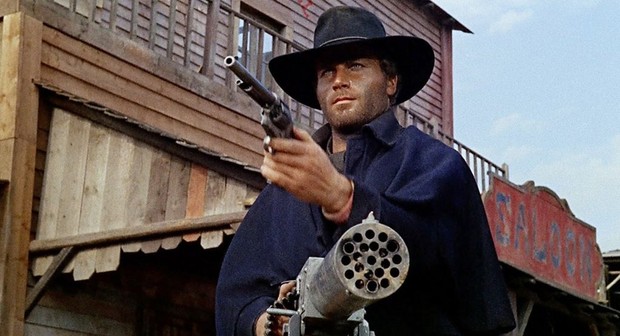
When Sergio Corbucci released Django in 1966, he didn't just create a hit movie; he unleashed a cultural phenomenon. Unlike Clint Eastwood's "Man With No Name", who was defined by his cool detachment and calculating nature, Franco Nero's Django was a man consumed by grief and driven by a singular, violent purpose.
Django is introduced dragging a coffin through a landscape of perpetual mud—a stark contrast to the sun-baked deserts of Sergio Leone's films. This immediately established a gothic, almost apocalyptic tone. He wasn't a hero seeking justice; he was an angel of death seeking revenge.
The Unofficial Sequels
Because Italian copyright laws were notoriously lax regarding character names, the success of Django led to an avalanche of "unofficial" sequels. Producers realized that simply slapping the name "Django" on a Western guaranteed a larger audience, especially in international markets like Germany and Japan.
Over the next five years, more than 30 films featured a protagonist named Django. These ranged from the surreal and macabre (Django Kill... If You Live, Shoot!) to the gothic (Django the Bastard). In many cases, the films had nothing to do with Corbucci's original vision, and the name was dubbed in during post-production to capitalize on the brand.
The True Legacy
Franco Nero would not officially reprise the role until 1987's Django Strikes Again, a film that attempted to bring the character into a more modern action context. However, the true legacy of Django lies in how he shifted the entire genre towards darker, more violent, and more cynical narratives.
Quentin Tarantino's 2012 homage, Django Unchained, proved that the archetype of the relentless, coffin-dragging avenger still resonates with modern audiences. Corbucci's original vision created a template for the anti-hero that continues to influence action cinema today.
International Appeal and Cultural Impact
The success of *Django* also had a massive impact on global markets, particularly in regions that appreciated its anti-establishment undertones. In West Germany, the film was a colossal success, leading to a dubbing trend where unrelated Spaghetti Westerns were renamed to include 'Django' in their German titles. Similarly, in Japan, the mixture of swordplay aesthetics (reimagined as gunplay) and strict codes of honor resonated with audiences who were fans of classic samurai cinema.
Through its stylized violence and dark poetry, Nero's performance defined a generation of tough-guy actors. The iconic imagery of the coffin, the mud-soaked boots, and the Gatling gun hidden in a box became shorthand for the ultimate outsider. Django did not just change the Italian Western; he permanently expanded the boundaries of what a cinematic anti-hero could represent.
About the Author: Spaghetti Cinema Research Team
Specializing in the intersection of musicology and 1960s European cinema.