Sartana: The James Bond of the West
Gadgets, magic tricks, and the gentleman gunfighter of the Italian frontier.
The Gentleman Killer
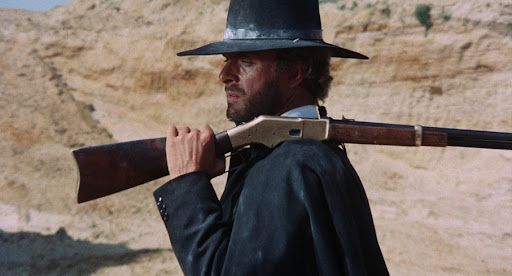
While most Spaghetti Western protagonists were dirty, unshaven mercenaries wrapped in ponchos, Sartana was something entirely different. Introduced in 1968's If You Meet Sartana Pray for Your Death, Gianni Garko's character was a sophisticated gentleman who wore a tailored black suit, a silk tie, and a pocket watch.
Sartana did not rely solely on a fast draw. He was a master of misdirection, using magic tricks, illusions, and a seemingly endless array of hidden weapons to outsmart his enemies. He was less a cowboy and more a Victorian magician with a high body count.
The Gadgets
The Sartana films heavily leaned into the spy craze of the 1960s. Where James Bond had Q Branch, Sartana had his own ingenuity. His most famous weapon was a four-barrel derringer hidden up his sleeve, but he also utilized throwing cards made of razor-sharp steel, exploding pocket watches, and a musical locket that doubled as a timer for dynamite.
This reliance on gadgets and trickery gave the Sartana series a uniquely playful tone. While the violence was still brutal, it was presented with a wink to the audience. Sartana wasn't just killing villains; he was performing for them.
A Franchise of Its Own
Gianni Garko played Sartana in four official films (with George Hilton stepping in for one). The series stands as one of the few true "franchises" in the Spaghetti Western genre, maintaining a consistent tone and character arc across multiple installments.
The influence of Sartana can be seen in later films like Sabata (starring Lee Van Cleef), which adopted the same formula of a gadget-wielding, impeccably dressed mastermind outsmarting corrupt town officials. Sartana proved that the Italian West had room for elegance amidst the bloodshed.
About the Author: Enzo Di Lucca
Enzo Di Lucca is a cinema historian and archivist specializing in European genre films. He has spent over two decades researching the lost negatives of the Italian West and has interviewed numerous stuntmen, composers, and directors from the era.