The Women of the Italian West: More Than Just Victims
Breaking down the rare but powerful female archetypes in a male-dominated genre
Beyond the Damsel
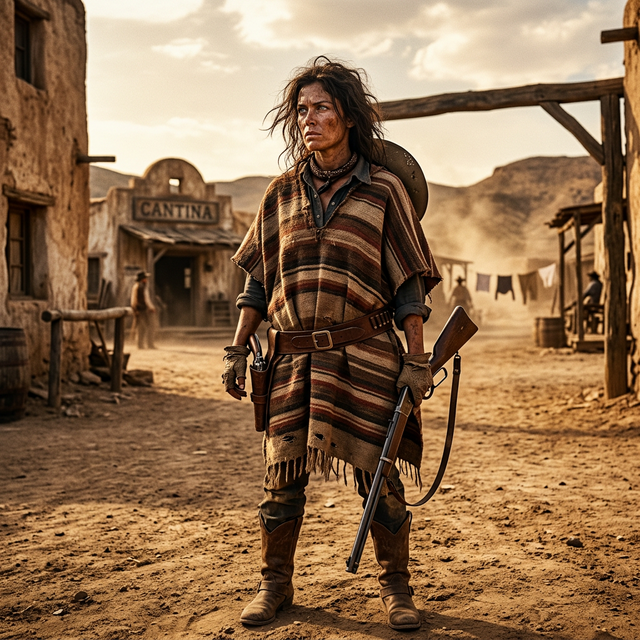
The Spaghetti Western is, by almost any metric, a hyper-masculine genre. Its worlds are defined by stubble, sweat, and the aggressive competition between men for gold and glory. However, to dismiss the role of women in these films as merely incidental is to miss one of the genre’s most interesting subversions.
In classic Hollywood Westerns, women were often relegated to two categories: the virtuous schoolteacher representing civilization, or the "fallen" saloon girl with a heart of gold. Italian filmmakers, with their more cynical and realistic worldview, introduced women who were as opportunistic, violent, and complex as their male counterparts.
The Revenge Seeker: Hannie Caulder
The most explicit example of a female-led Spaghetti Western is "Hannie Caulder" (1971), starring Raquel Welch. While a co-production, it carries the distinct DNA of the Italian West. Hannie is not a woman waiting to be saved; she is a woman who seeks out a professional bounty hunter (played by Robert Culp) to teach her how to kill the men who wronged her.
Welch’s performance is notable for its lack of traditional "feminine" vulnerability. She wears a poncho and gun belt, becoming a mirror image of the Man With No Name. The film acknowledges that in the lawless West, gender is irrelevant when it comes to the mechanics of vengeance.
The Quiet Power: Jill McBain
In Sergio Leone’s masterpiece "Once Upon a Time in the West", Claudia Cardinale’s Jill McBain is arguably the film’s moral and emotional center. While the men (Bronson, Fonda, Robards) are relics of a dying age—ghosts fighting over a past that no longer exists—Jill represents the future.
Jill is a former prostitute who arrives in the West to find her new family murdered. Rather than fleeing back to the city, she stays to claim her land, eventually becoming the matriarch of the new town being built around the railroad. Leone uses her character to show that while men build the West through violence, it is women who ultimately civilize it through endurance.
The Outlaws and Matriarchs
Other films pushed boundaries even further. In "The Great Silence", Vonetta McGee plays a black woman whose husband is murdered by bounty hunters. Her role is significant not just for its depth, but for being a rare instance of a black female lead in the genre, treated with dignity and agency as she recruits a mute gunman to exact her revenge.
In the Sartana and Sabata films, women are often depicted as master manipulators, using the men’s greed against them. They are frequently the ones who truly understand how the corrupt system works, staying one step ahead of the gunslingers who think they are in control.
About the Author: Enzo Di Lucca
Enzo Di Lucca is a cinema historian and archivist specializing in European genre films. He has spent over two decades researching the lost negatives of the Italian West and has interviewed numerous stuntmen, composers, and directors from the era.