The Zapata Western: Marxism with a Gun
Exploring the radical politics behind the Mexican Revolution sub-genre
Revolution as Backdrop
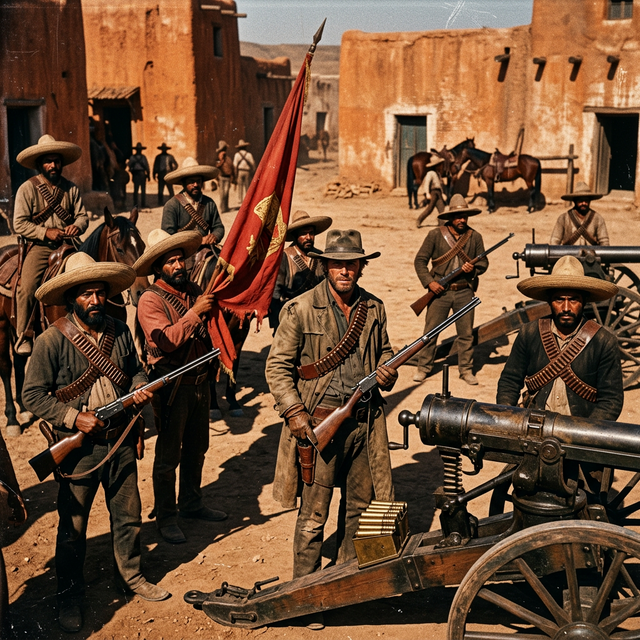
While many Spaghetti Westerns were content with simple stories of bounty hunters and gold, a specific sub-genre emerged in the late 1960s that was overtly political: the Zapata Western. Named after the Mexican revolutionary Emiliano Zapata, these films used the Mexican Revolution of the 1910s as a thin veil to discuss the contemporary political upheavals of the 1960s.
Directors like Sergio Sollima and Sergio Corbucci were often staunchly left-wing, and they saw the Western as the perfect tool to critique US imperialism, capitalism, and the corruption of the ruling class.
The Student and the Peasant
The classic Zapata Western structure involves a pairing of two characters: a cynical, usually American or European professional (the mercenary) and a charismatic but uneducated Mexican peasant (the revolutionary).
In Sollima’s "The Big Gundown", the hunt for a bandit becomes a journey of political awakening for the lawman, as he realizes the "criminal" he is chasing is actually a victim of the wealthy landowners. This narrative arc served as a metaphor for the student-worker alliances forming in Europe during the protests of 1968.
Tepepa and the Failure of Revolution
Perhaps the most radical of these films is "Tepepa", starring Tomas Milian and Orson Welles. The film is a bleak look at how revolutions are often betrayed by the very people who lead them. It presents a world where the old colonizers are simply replaced by new bureaucrats, leaving the peasant caught in the middle.
Milian’s performance as the titular revolutionary is iconic—he is a man of the earth, dirty, energetic, and ultimately doomed. The film’s inclusion of Orson Welles as a corrupt colonel added a layer of "prestige" to what was essentially a radical political manifesto disguised as an action movie.
About the Author: Enzo Di Lucca
Enzo Di Lucca is a cinema historian and archivist specializing in European genre films. He has spent over two decades researching the lost negatives of the Italian West and has interviewed numerous stuntmen, composers, and directors from the era.